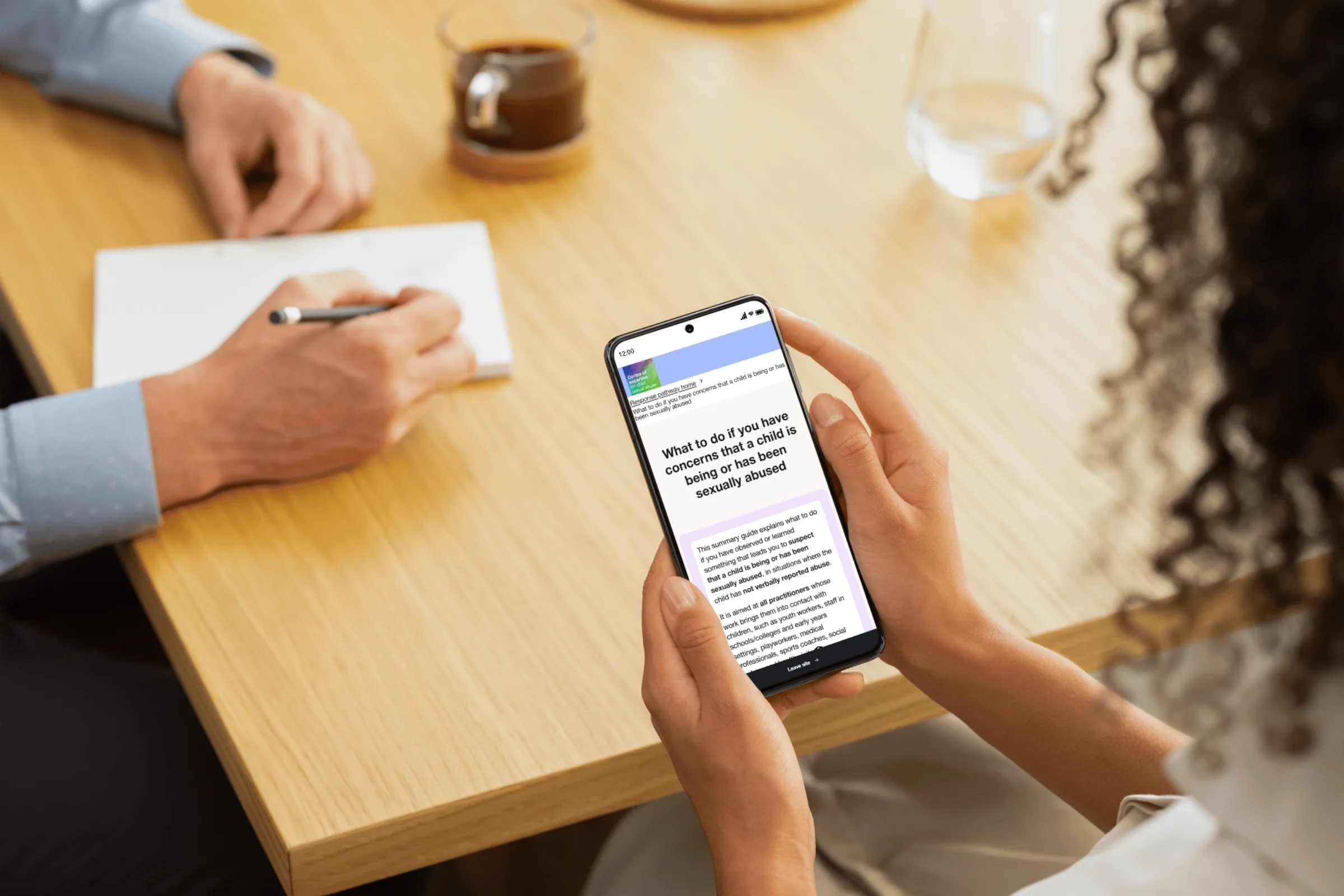

The Centre of expertise on child sexual abuse (CSA Centre) has published its new Sharing information to tackle child sexual abuse guide – an online resource explaining who holds what information, and how to make sure the right information is shared in a timely and proportionate way to help effectively respond to child sexual abuse.
When responding to concerns about child sexual abuse, professionals collect a lot of information about the children and families they work with, the nature of their abuse, and those who may have abused them. All agencies collect this information, and sharing it can be vital in supporting multi-agency responses.
There is often confusion about what information can and cannot be shared, both within and between different agencies or organisations. As a result, important information is often not shared in a useful, accessible or timely way. But with guidance, professionals can work together to share information effectively to support early identification, protect children from abuse, and support children in their recovery and wellbeing.
Sharing information to tackle child sexual abuse is a comprehensive guide to finding, sharing and using information from different agencies and organisations to better respond to child sexual abuse. The guide is designed for all professionals working with children in England and Wales– whether in statutory agencies or voluntary sector and community organisations – to learn how to use and share the information they hold with other professionals to effectively safeguard the children they work with from child sexual abuse.
Safeguarding children is everyone’s responsibility, and no single professional or agency holds the full picture. The guide provides a practical ‘who’s who’ of the agencies and organisations involved – including social care, criminal justice, health, education, the voluntary sector, and community organisations – the information each may hold, and how to use it to ensure responses are well-informed and coordinated.
Legislation makes clear that secure information sharing is a legal and moral duty for all professionals involved in children’s welfare. Developed to reflect current legislation, statutory and professional guidance, and advice from the Information Commissioner’s Office, professionals can trust the guide to help them meet those duties.
Knowing when to share information, and how to share it well, can be as important as knowing what to share. Professionals do not need to be certain that abuse is taking place before taking action. The guide sets out the circumstances where information should be shared without delay, helping professionals act with confidence when it matters most. It also draws on guidance from the Information Commissioner’s Office to help professionals share information proportionately, supporting both good practice and legal duties.
Good information exchange can strengthen all parts of a response to child sexual abuse. It can help build a detailed picture of a child’s wellbeing and protective factors around them, and helps investigate and disrupt individuals who pose a risk to other children. Read the new resource – Sharing information to tackle child sexual abuse: An introductory guide for professionals – on the CSA Centre website: Sharing information to tackle child sexual abuse | CSA Centre